
For parents of high schoolers
It’s Not Drama. It’s Neuroscience.
What every parent needs to know about how to survive the
college application season
By Brette Genzel-Derman, PsyD
CEO & Founder, Innovative Group PsychotherapyFeatures Overview

If you’re a parent of a high schooler navigating the college application process, you probably already know — this is not easy!
Maybe your teen avoids the college conversation entirely, snaps at you for asking a simple question about their essay, or dissolves into tears over something that seems small. Maybe they’ve convinced themselves the world will end if they don’t get into their first-choice school — and no amount of reassurance seems to touch it. If any of this sounds familiar, you’re not alone.
What you’re witnessing are two sides of the same coin, and both are neurological responses to stress — not character flaws. The teenager who is catastrophizing, fixated on a single school, or spiraling into panic is experiencing a hyperactivated stress response. Their nervous system has registered the college process as a genuine threat, flooding them with urgency, fear, and a desperate need for certainty in a situation that offers none.
The teenager who appears checked out, avoidant, or oddly indifferent is experiencing something equally real but harder to recognize: a shutdown response. Research confirms that when a person’s nervous system becomes too overwhelmed to fight or flee, it freezes. This protective paralysis can make a teen look like they simply don’t care — when in reality, they care so much that their brain has gone into protective shutdown mode in order to cope. (Roelofs, 2017)

Both responses are the nervous system doing exactly what it is designed to do. Neither responds well to pressure, reassurance, or pushing harder.

Something is unfolding during college application season that goes far deeper than deadlines and essays. It’s neurological, it’s relational, and it’s affecting both your teenager and you in ways that most families never see coming.
I write this not as an outside observer, but as someone who works every day with teenagers and families. What I see, again and again, is that the college process is so much more than meets the eye.
This process isn’t just practical. It’s existential.
On the surface, college applications are about deadlines and decisions. But for your teen, every application carries an unspoken question: “Am I enough? Will I get in? Where will I fit? Am I going to be ok?”
These aren’t dramatic exaggerations. These are the psychological stakes beneath the homework help and the to-do lists. A rejection letter to an adolescent brain doesn’t just feel disappointing — it feels like a verdict on their worth as a person.

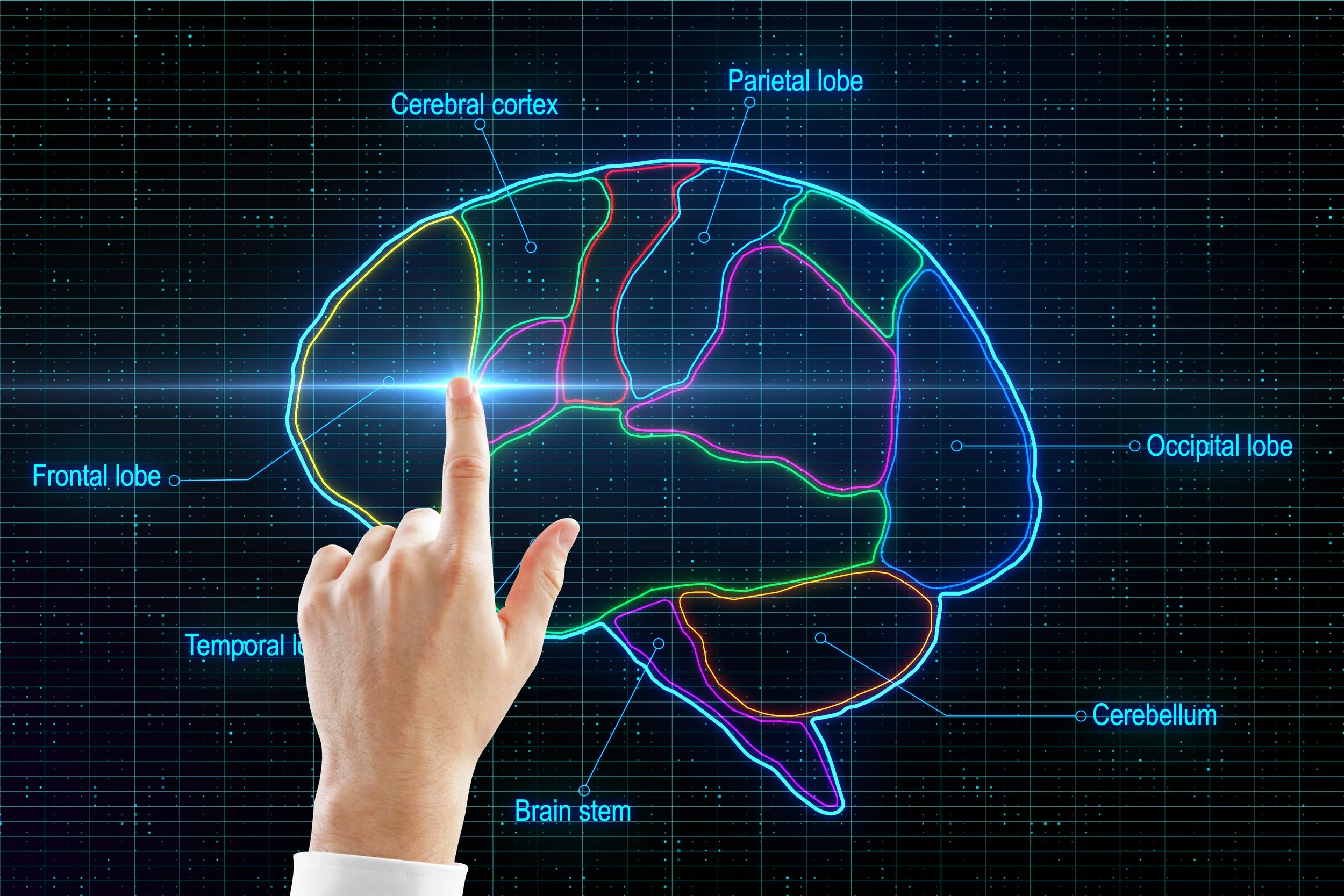
WHAT BRAIN RESEARCH TELLS US
The prefrontal cortex — responsible for reasoning and emotional regulation — doesn’t fully mature until around age 25. Teenagers are neurologically more reactive to stress and social evaluation than adults, not because they lack character or maturity, but because their brains are genuinely still under construction.
Social rejection activates the same neural pathways as physical pain. A college rejection isn’t just disappointing to your teen — it can genuinely hurt in the body the same way a physical injury does. This isn’t sensitivity or overreaction. It’s biology.
What no one warns you about: things get stirred up in you, too.
Something happens to parents during this season that almost never gets talked about. As you watch your child navigate this process, old feelings can surface — often without warning.
Maybe you grew up believing that achievement was everything. Maybe you remember feeling anxious and insecure during your own college process. Maybe you were more self-motivated and proactive than your child, or your parents pushed you in ways you believe helped you get where you are today.
You don’t have to have had a traumatic childhood to feel anxious during this season. This process has a way of waking up old feelings in almost every parent. It is not a sign that anything is wrong with you. It simply means you are human — and that you care.


WHAT BRAIN RESEARCH TELLS US
A parent’s own attachment history directly shapes how they respond to their child’s distress and major life transitions. Early emotional memories are often stored in the body as implicit memories — they come forward in a visceral way when something triggers us in the present. (van der Kolk, 2014)
Research by Fonagy, Steele, and Steele (1991) found that a parent’s own unresolved attachment history is among the strongest predictors of how they show up for their children under pressure. This isn’t a personal failing. It’s neuroscience.
“When we understand what’s really being triggered, we can respond with far more compassion — for our teens, and for ourselves.”
A gentle invitation to reflect — without judgment
Questions worth sitting with:
→ What did achievement mean in my family growing up? Was love or approval ever tied to performance?
→ What fears am I carrying about my child’s future, and where do those fears really come from?
→ When I imagine my child not getting into a “good” school, what is the feeling underneath that worry?
→ Am I responding to my teen — or to something from my past that feels emotional or unfinished?
→ How did my parents handle uncertainty? Am I repeating or reacting against that pattern right now?
The question worth sitting with isn’t whether you care — of course you care.
The question is: whose anxiety is driving the car right now, and where is it actually taking you?

What gets transmitted — even when no one intends it.
Teens are extraordinarily perceptive. They can sense what is going on even if you say all the right things — “We just want you to be happy,” “Any school will be wonderful.” They pick up on the emotional energy in the room and can feel your disappointment even if you think you’re doing a great job of hiding it.
They internalize messages from you, even when those messages were never spoken aloud. This is not about blame. When emotions run beneath the surface, they’re genuinely hard to control — even for the most self-aware parents. What we carry inside doesn’t stay hidden. It shows up in our homes, in our conversations, and in the moments that matter most.
WHAT BRAIN RESEARCH TELLS US
Brain imaging research shows that a parent’s brain lights up in response to a child’s distress — whether it is a broken arm or a denied college admission. The amygdala cannot distinguish between a genuine emergency and a cultural narrative. To your nervous system, they feel exactly the same. What you feel as a parent is not an overreaction. It is neurologically real. (Swain et al., 2008)

WHAT BRAIN RESEARCH TELLS US
Parental anxiety travels through behavioral and emotional cues — the sighs, the silences, the look on your face when a particular school name comes up. Children absorb those signals as information about how safe the world actually is. (Aktar et al., 2022)
Research confirms that parental educational anxiety directly fuels adolescent academic burnout. The emotional climate you create at home matters more than any deadline, score, or school name on a letter. (Yang et al., 2025)
“The most powerful thing you can do for your teen may have nothing to do with college at all. It may have everything to do with your own inner work.”

The shutdown teen — Avoidant, disengaged, not trying
Far more likely to be misread. Parents may respond with frustration or increased pressure — all of which confirms to the teen’s nervous system that the environment is threatening, deepening the freeze.
What they need: Not a push. Regulation, safety, and a felt sense that forward movement is possible without catastrophic consequences.
Both teens carry the same core wound at the center of this season: the belief — encoded not just in thought but in the body — that their worth is contingent on the outcome. “If I don’t get in, I have failed. If I fail, I am not enough.”
That belief, whether it drives panic or paralysis, is what needs to be reached. And it cannot be reached through words alone.
Two different teens, the same underlying need
Parents often experience these two presentations very differently — and respond in ways that, despite good intentions, can make things worse.
The hyperactivated teen — Panicking, fixated, catastrophizing
Easier to recognize as struggling. Parents tend to respond with reassurance, logic, or their own escalating anxiety — none of which regulates a nervous system that is already flooded.
What they need: Not information or perspective. A co-regulated, calm presence that communicates safety rather than urgency.


What actually helps: working at the level of the nervous system
Eye Movement Desensitization and Reprocessing (EMDR), developed by Francine Shapiro (2001), offers opportunities for teens to feel more empowered through this process. Resource Development and Installation (RDI) is a specific aspect of EMDR that strengthens neural networks associated with safety, competence, and worth — making these states more accessible for teens when stress is high.
From a Polyvagal perspective, this matters enormously: safety is not a comfort but a biological prerequisite for change. The nervous system cannot update while it is still in protection mode. (Porges, 2003)
WHAT BRAIN RESEARCH TELLS US
Adolescence is one of the most neuroplastic periods of human development. But real change in deep-seated emotional patterns requires more than insight alone — it requires repeated, emotionally engaged experience within a safe relational context. This is why the felt experience of safety matters so much in therapy, and why it’s where lasting change actually begins.

What is EMDR-RDI, and what does it actually do?
For teenagers, RDI is about helping them access a genuine felt sense of unconditional worth — not as an intellectual concept, but as a real body experience. Therapists help uncover the core beliefs a teen holds about themselves — “I’m not enough” — that are encoded in the body somatically and driving the distress beneath the surface.
As much as humans want to believe they can think their way out of difficult emotions, it’s often not the case. RDI helps a teenager genuinely feel, rather than simply understand, that their value was never contingent on an admissions outcome.
When a teenager who has tied their value to achievement is guided through resourcing to genuinely feel what it’s like to be valued unconditionally, something shifts at a neurological level. New neural pathways begin to form. The brain acquires a new reference point for what safety and worth actually feel like in the body.
The same is true for parents. When parents can access a somatic sense of steadiness and a genuine capacity to hold uncertainty without panic, it changes the emotional climate of the entire home.

WHAT BRAIN RESEARCH TELLS US
RDI works by strengthening the brain’s positive memory networks, giving the nervous system a new reference point to return to when stress hits. Each time someone accesses a resource — a safe memory, a moment of feeling capable, an image of being cared for — they are practicing a genuine return to regulation. Over time, the nervous system learns that safety is real and reachable. That shift changes everything.


You’re not failing. You’re being human in an unusually demanding moment.
Parenting a teenager through the college application process is one of the more complex emotional experiences of modern family life. It asks you to hold your child’s fear and your own at the same time. It asks you to stay regulated when everything around you is signaling urgency. It asks you to loosen your grip just a little — even when every instinct says hold on tighter.
The fact that you’re reading something like this — looking for understanding rather than just another strategy for navigating the application portal — says something important about the kind of parent you are trying to be.
The most powerful thing you can do
What if this season could be approached differently — not as a race to the right outcome, but as an opportunity to give your teenager something that will outlast any admissions decision?
The teens who navigate this season best are not always the ones with the strongest applications. They are the ones who have been given repeated, genuine experiences of being valued unconditionally — whose parents found a way, even in the middle of all the pressure, to communicate: you were always enough. Not after you get in, not if you perform — but always.
That message cannot be delivered through words alone. It has to be felt. And the good news is that it is never too late to begin offering it.
The work you do on your own anxiety, your own unfinished stories, your own capacity to stay present — that is the work that changes things. Not just for this season, but for everything that comes after it.
How Innovative Group Psychotherapy can help
We’ve developed a specialized program to help families navigate this season with more ease and less conflict — working beneath the surface to address the emotional patterns and core beliefs that drive anxiety.
For teens
Individual therapy creates a private space to process fear, perfectionism, and the deeper questions of identity this process brings up.
For parents
Individual sessions offer an opportunity to explore what you might be needing in order to better support your child.
Together
Family sessions bring parents and teens together to rebuild communication and practice the dialogue this process requires.
EMDR / RDI — endorsed by the World Health Organization, the EMDR International Association (EMDRIA), and the American Psychological Association.
Learn more at igpsychotherapy.com
If this resonated with you
Whether you’re reaching out for your teen, for yourself, or for your whole family — you don’t need to have it all figured out first. That’s exactly what we’re here for.